In many ways, being an educator in our current moment is harder than it’s ever been. We see this reality playing out both at the national level and locally, where we at Deep hear about it firsthand from the educators we know and love, brave people working hard every day to lift up their classrooms of young people despite the dysfunction of the American education system. Constructing a support system for educators—who are themselves anchors in the support systems for our young people—is a vital task, and one Deep doesn’t take lightly. Most recently, Deep launched a series of workshops around educator well-being that we called Fierce Self-Compassion, a mental and emotional framework for educators that would allow them both to ground themselves and to advocate for better for themselves and their students.


Megan reimagined MSC for use in Deep Center’s context, which meant adding a lens for using the framework to advocate for a more just and equitable education system—whatever that looked like for each individual educator. At Deep, therefore, Mindful Self-Compassion became Fierce Self-Compassion. “The ultimate goal of this program is getting enough wise distance from the system we might be working in—in this case an education system built on capitalism—to see one, that as a teacher we cannot keep the burden solely on ourselves which is contributing to a lot of future burnout, and two, to hopefully be able to make changes or advocate for changes within the education system,” Megan said.
Deep’s eight-week Fierce Self-Compassion series allowed six local educators (stipended for their time) to meet after school on Mondays to talk about the neuroscience of self-criticism and the culture of urgency created by the school system. “Self-compassion is both tender and fierce. Those aren’t my words, that’s from the research. When we think about compassion, it often feels really squishy. A common misconception is that it is either selfish or weak, but the argument is that it takes the tender side and the fierce side, and that both are compassionate,” Megan said. An educator practicing Fierce Self-Compassion might, for instance, advocate against mandated classroom practices that are not serving their students well—or even bravely change these practices on their own. They might give themselves grace on difficult days, and they might stand firm in a belief in their own self-worth when colliding with the national systems which treat educators with suspicion or as replaceable cogs in a factory machine.
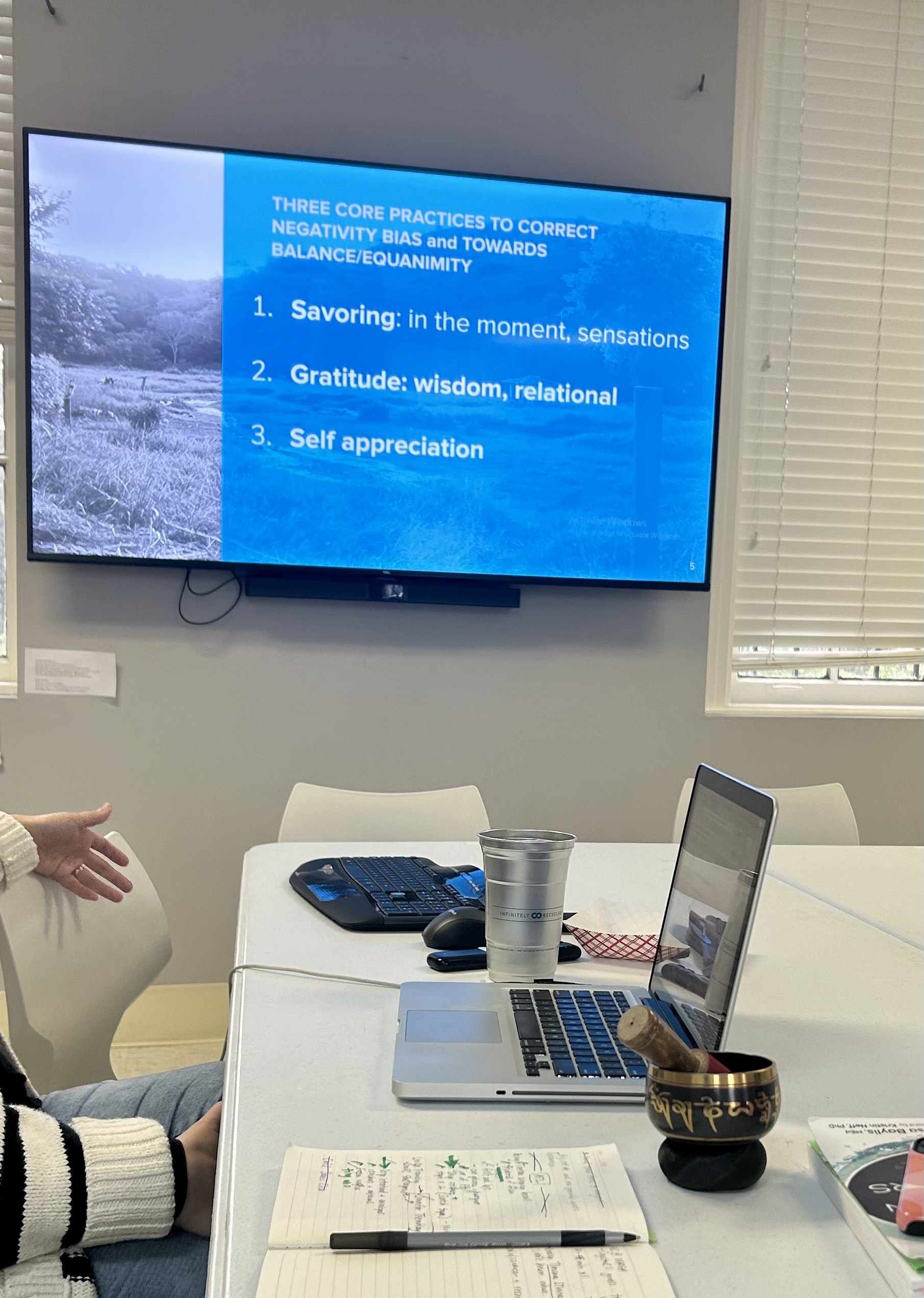

Megan and the Deep team are hoping to host the series as a regular part of the Deep calendar. “It’s a social-emotional learning skillset we’re training people in. Even though a lot of it is about looking at ourselves, it also affects the way we see other people, like our colleagues or our students. There’s so much responsibility piled onto our teachers and our schools and our students, so taking time to cultivate awareness in all that has generous ripple effects,” Megan said. Who knows how far those ripples could spread?
To learn more about Mindful Self-Compassion, click here.
If you know a local educator who could benefit from connecting with this series or with Deep, email Mel at mel@deepcenter.org.
To learn more about the work Deep does with local educators, click here.